Luna AI – Personal Medical Assistant
Healthcare AI case study focused on a medical assistant for clinicians and patients. Designed plain-language question flows, sourced answers, uncertainty messaging, escalation paths, medication and symptom-support patterns, and safety-first interaction design. Recruiter signals: clinical AI, LLM UX, trust and safety, regulated product design, evidence presentation, and ethical AI experience design.
[Client]
Luna AI
[Year]
2026
[Role]
AI Product Design · Healthcare UX · LLM Interfaces · Trust & Safety · Clinical Workflows
[Catagory]
Healthcare
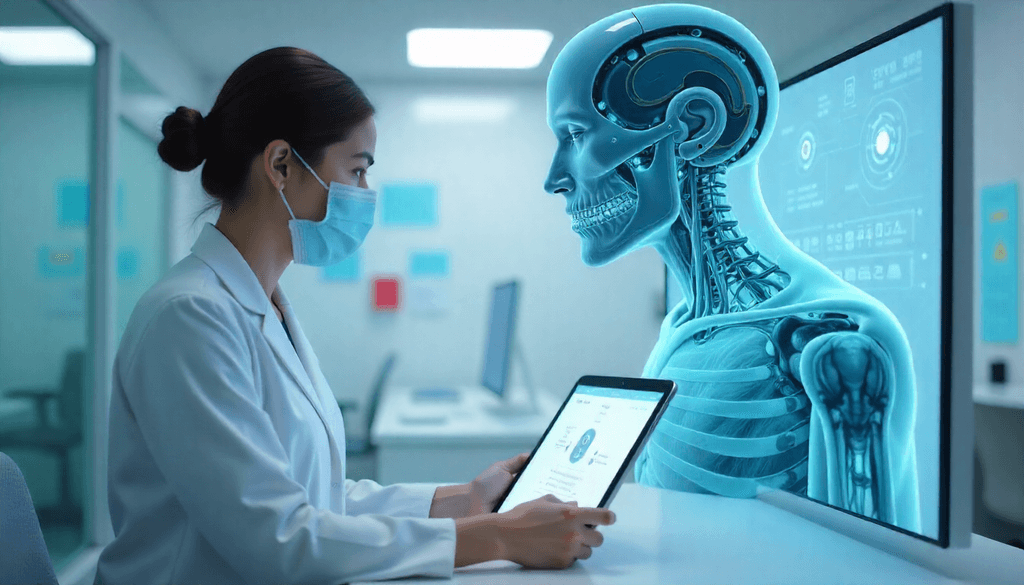
Snaps From the Project
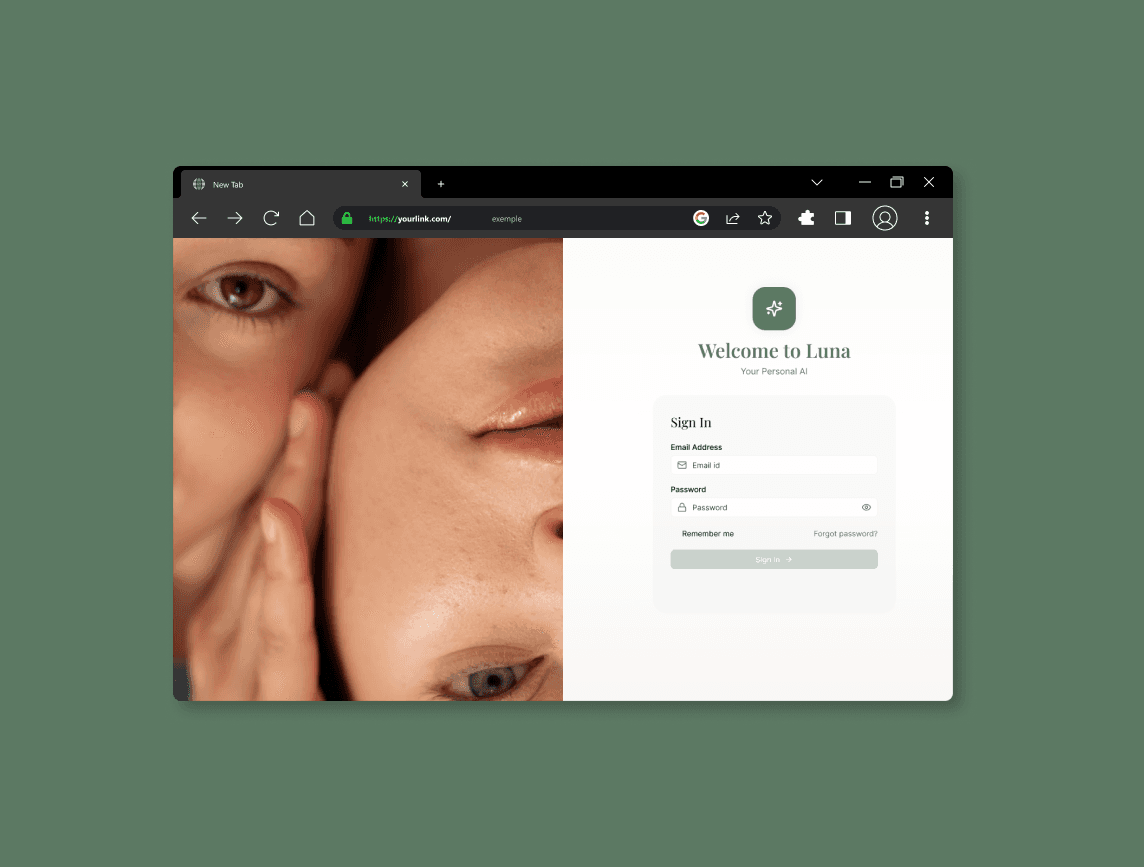
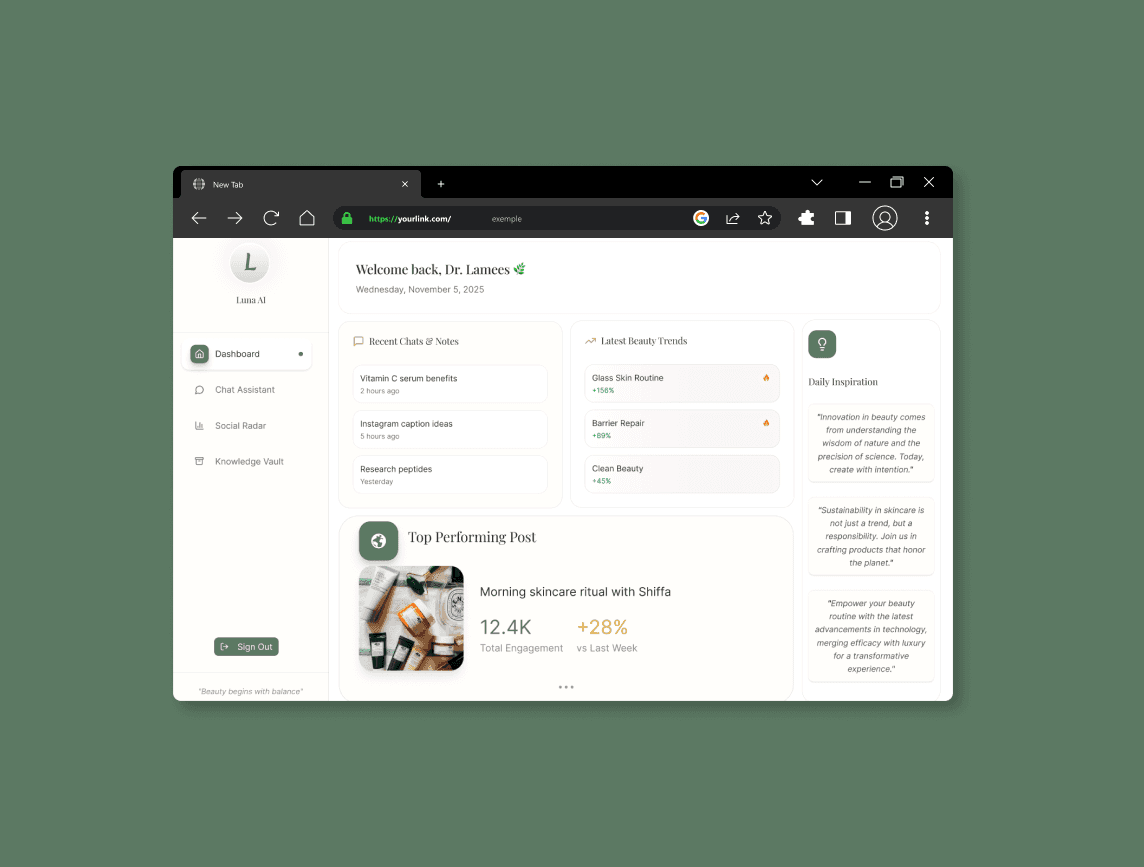
Why this matters for UK health and AI roles
This case study shows how I design high-trust AI experiences in regulated contexts: sourced answers, uncertainty, escalation to humans, patient safety, clinical workflows, and clear communication for both technical and non-technical users.
Problem
The Healthcare Information Challenge (UAE Context)
Physician & Patient Pain Points
Doctors have limited consultation time despite complex patient cases
High patient expectations for clear explanations in Arabic and English
Medical terminology creates comprehension barriers for many patients
Medication adherence issues among chronic-condition patients
Fragmented records across public and private healthcare providers
Current Solutions & Gaps
Search Engines: Cause patient anxiety and misinformation
Global Medical Websites: Not localized to UAE guidelines or cultural context
Hospital Portals: Limited interpretation support and poor UX
Generic AI Tools: Not aligned with UAE regulations or clinical workflows
Market Opportunity
Target Audience: Doctors practicing in the UAE (public & private sectors)
Primary Users: Primary care physicians, specialists, and hospital clinicians
Unmet Need: A culturally aware, privacy-first AI assistant that supports doctors in educating patients and improving care quality—without replacing clinical judgment.
Research & Discovery
Research Methodology
Phase 1 – Doctor & Patient Interviews (6 weeks)
24 interviews with UAE-based physicians (primary care and specialists)
20 patient interviews across diverse nationalities
Observed real outpatient consultation workflows
Phase 2 – Clinical & Regulatory Consultation (4 weeks)
Hospital administrators
UAE healthcare compliance experts
Pharmacists and nursing staff
Phase 3 – Ethics & Regulation Research (3 weeks)
UAE healthcare data privacy standards
AI ethics frameworks aligned with regional regulations
Medical liability considerations
Phase 4 – Competitive Analysis (2 weeks)
Regional health apps and portals
Global AI healthcare tools adapted for Middle East markets
User Personas
Primary Persona: Dr. Lamees Al-Mansouri, General Practitioner
Demographics:
Age: 38
Specialty: Family Medicine/General Practice
Location: Dubai Healthcare City
Medical Education: MBBS (UAE University), Family Medicine residency (Dubai)
Years in Practice: 12 years
Languages: Arabic (native), English (fluent)
Practice Setting: Private clinic, 35-45 patients/day
Professional Profile:
Board certified in Family Medicine
Sees diverse patient population (Emiratis, Arab expats, South Asians, Filipinos, Westerners)
Manages chronic diseases (diabetes, hypertension, thyroid disorders)
Handles acute presentations and pediatric cases
Refers complex cases to specialists
Uses clinic EMR system (clunky, slow)
Daily Clinical Challenges:
Time pressure: 10-12 minutes per patient
Language barriers with non-Arabic/English speakers
Keeping current with clinical guidelines
Managing diagnostic uncertainty
Coordinating care with specialists
Insurance approval complexities
Documentation taking time away from patients
Technology Use:
Smartphone: iPhone (uses medical apps)
Searches UpToDate when time permits (rarely)
WhatsApp groups with physician colleagues for quick questions
Clinic EMR system (mandatory but frustrating)
Occasionally uses Google for quick medical queries (knows it’s not ideal)
Pain Points:
Clinical Decision Support: “I can’t remember every drug interaction or rare presentation. I worry I’m missing something important.”
Time Management: “By the time I search for information, the patient appointment is over. I need instant answers.”
Documentation: “I stay 90 minutes after clinic closes just to finish my notes. It’s exhausting.”
Cultural Competency: “Treatment plans need to consider Ramadan fasting, prayer times, cultural beliefs about medications. This isn’t in textbooks.”
Multilingual Communication: “How do I explain complex medical information to a patient who speaks limited English or Arabic?”
Quote:
“I became a doctor to help patients, not to fight with EMR systems and drown in paperwork. I need a smart assistant that understands medicine, understands my patients’ cultural context, and saves me time—not another tool that makes my day harder.”
Goals:
Provide excellent, evidence-based care to every patient
Make accurate diagnoses efficiently
Avoid medical errors and adverse events
Spend more time with patients, less on documentation
Stay current with medical knowledge
Finish clinic on time to have work-life balance
Build strong patient relationships
How Luna AI Helps:
Instant clinical decision support during consultations
AI-generated clinical notes from brief inputs
Differential diagnosis suggestions with local epidemiology
Drug interaction checking against UAE formulary
Culturally-appropriate patient education materials in multiple languages
Evidence-based treatment protocols
Voice-to-text documentation in Arabic and English
Secondary Persona: Dr. Khalid Rahman, Emergency Medicine Physician
Demographics:
Age: 42
Specialty: Emergency Medicine
Location: Rashid Hospital, Dubai
Medical Education: MBBS (Pakistan), Emergency Medicine fellowship (Canada)
Years in Practice: 15 years
Languages: English (fluent), Urdu (native), Arabic (conversational)
Practice Setting: Public hospital emergency department, high-acuity cases
Professional Profile:
Works 12-hour shifts in busy ED
Sees 25-30 patients per shift (higher acuity than clinic)
Makes rapid diagnostic decisions under pressure
Manages life-threatening emergencies
Coordinates with multiple specialties
Trains emergency medicine residents
Daily Clinical Challenges:
High-stakes, time-critical decisions
Limited patient history (many acute presentations)
Language barriers with critically ill patients
Managing multiple patients simultaneously
Keeping current with emergency protocols
Medical-legal documentation requirements
Cognitive fatigue during long shifts
Pain Points:
Rapid Risk Stratification: “Is this chest pain low-risk or high-risk? I have minutes to decide.”
Rare Emergency Presentations: “I haven’t seen certain conditions in years. I need quick refreshers on management protocols.”
Medication Dosing: “Pediatric dosing, renal adjustments, drug interactions—I can’t memorize everything.”
Shift Handoffs: “Documenting what happened during my shift takes 60-90 minutes after a 12-hour shift.”
Quote:
“In the ED, every decision could be life or death. I need AI that gives me accurate, fast guidance on high-risk cases and helps me document everything properly for medical-legal protection.”
How Luna AI Helps:
Emergency protocol decision trees
Risk stratification calculators
Critical medication dosing (weight-based, renal-adjusted)
Quick access to toxicology information
Automated shift summary documentation
Differential diagnosis for unusual presentations
Tertiary Persona: Dr. Aisha Mohammed, Pediatrician
Demographics:
Age: 35
Specialty: Pediatrics
Location: Mediclinic, Abu Dhabi
Medical Education: MBBS (Egypt), Pediatrics residency (UAE)
Years in Practice: 8 years
Languages: Arabic (native), English (fluent)
Practice Setting: Private hospital outpatient pediatrics
Professional Profile:
Sees infants through adolescents
Well-child visits and acute illness management
Vaccination counseling (adapting to UAE schedule)
Parent education and reassurance
Growth and development monitoring
Daily Clinical Challenges:
Anxious parents demanding antibiotics
Weight-based medication dosing
Developmental milestone tracking
Cultural variations in parenting practices
Vaccine hesitancy conversations
Pediatric differential diagnoses (broad and varied)
Pain Points:
Parent Communication: “Parents Google symptoms and come in convinced their child has a rare disease. I need to educate and reassure.”
Dosing Calculations: “Weight-based dosing for every medication, every patient. I double-check everything but worry about errors.”
Cultural Sensitivity: “Emirati parents have different expectations than expat parents. I adapt my communication style constantly.”
Quote:
“Pediatrics is as much about educating parents as treating children. I need tools that help me communicate clearly across cultures and languages, and ensure I never make a dosing error.”
How Luna AI Helps:
Automatic weight-based dosing calculations
Age-appropriate differential diagnoses
Parent education handouts in multiple languages
Growth chart tracking and interpretation
Vaccination schedule management
Evidence-based antibiotic stewardship guidance
Critical Research Insights
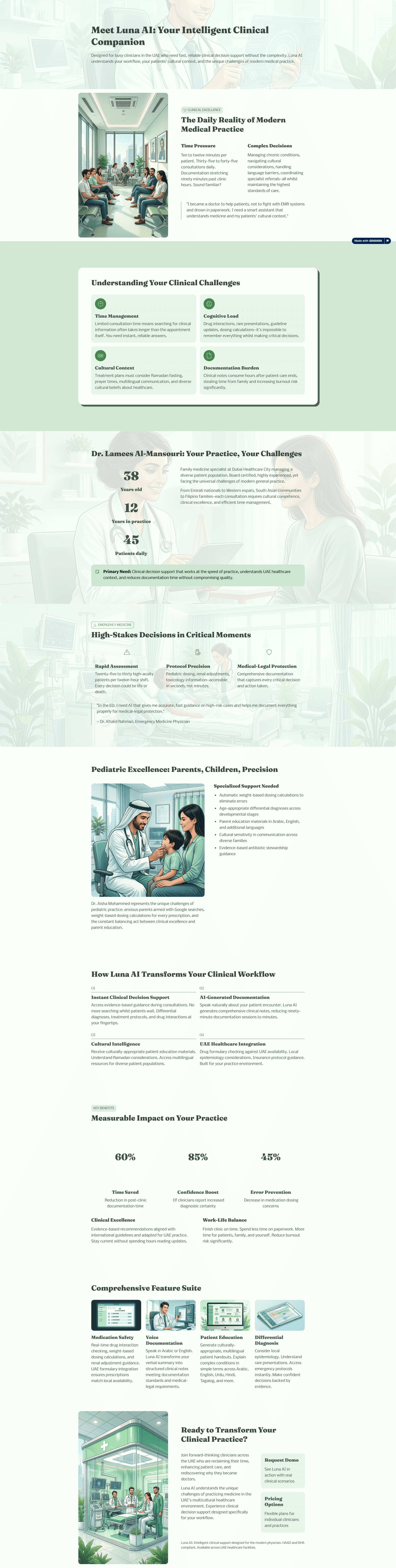
Ethical AI Framework
Core Principles for Clinical AI in UAE Healthcare
Based on medical ethics (beneficence, non-maleficence, autonomy, justice), Islamic medical ethics, and AI ethics frameworks:
1. Physician Autonomy & Clinical Judgment
Principle: AI assists and augments physician decision-making but never replaces clinical judgment.
Implementation:
AI provides suggestions, never directives
Physicians maintain full decision authority
Transparent reasoning for all AI recommendations
Easy override of AI suggestions
Human physician always in the loop
Clear labeling: “Clinical Decision Support” not “Diagnosis”
Example - AI Suggestion Framework:
2. Medical Safety & Accuracy
Principle: Patient safety is paramount. AI must meet highest standards of medical accuracy.
Implementation:
Evidence-based recommendations (validated clinical guidelines)
Regular validation against medical literature
Clinical advisory board reviews AI outputs quarterly
Error reporting system for AI inaccuracies
Drug interaction database updated in real-time
Dosing calculations triple-validated
High-risk alerts for critical situations
3. Privacy & Data Security (UAE Compliance)
Principle: Patient data privacy is sacred, especially in culturally sensitive UAE context.
Implementation:
Compliance with UAE Data Protection Law
DHA/DOH regulatory alignment
Local data storage options (UAE-based servers)
End-to-end encryption
Role-based access controls
Audit logs of all data access
De-identification for AI training
Explicit consent for data use
Special protections for sensitive conditions (mental health, reproductive health, HIV)
Privacy Architecture for UAE:
4. Cultural Competency & Inclusivity
Principle: AI must respect UAE’s multicultural context and Islamic values.
Implementation:
Multilingual support (Arabic, English, Hindi, Urdu, Tagalog)
Culturally-appropriate care recommendations
Ramadan-specific medication guidance
Sensitivity to cultural health beliefs
Gender-specific considerations
Halal medication alternatives when relevant
Prayer time considerations for medication schedules
Training data includes diverse UAE populations
Example - Culturally-Aware Recommendation:
5. Transparency & Explainability
Principle: Physicians must understand why AI makes recommendations.
Implementation:
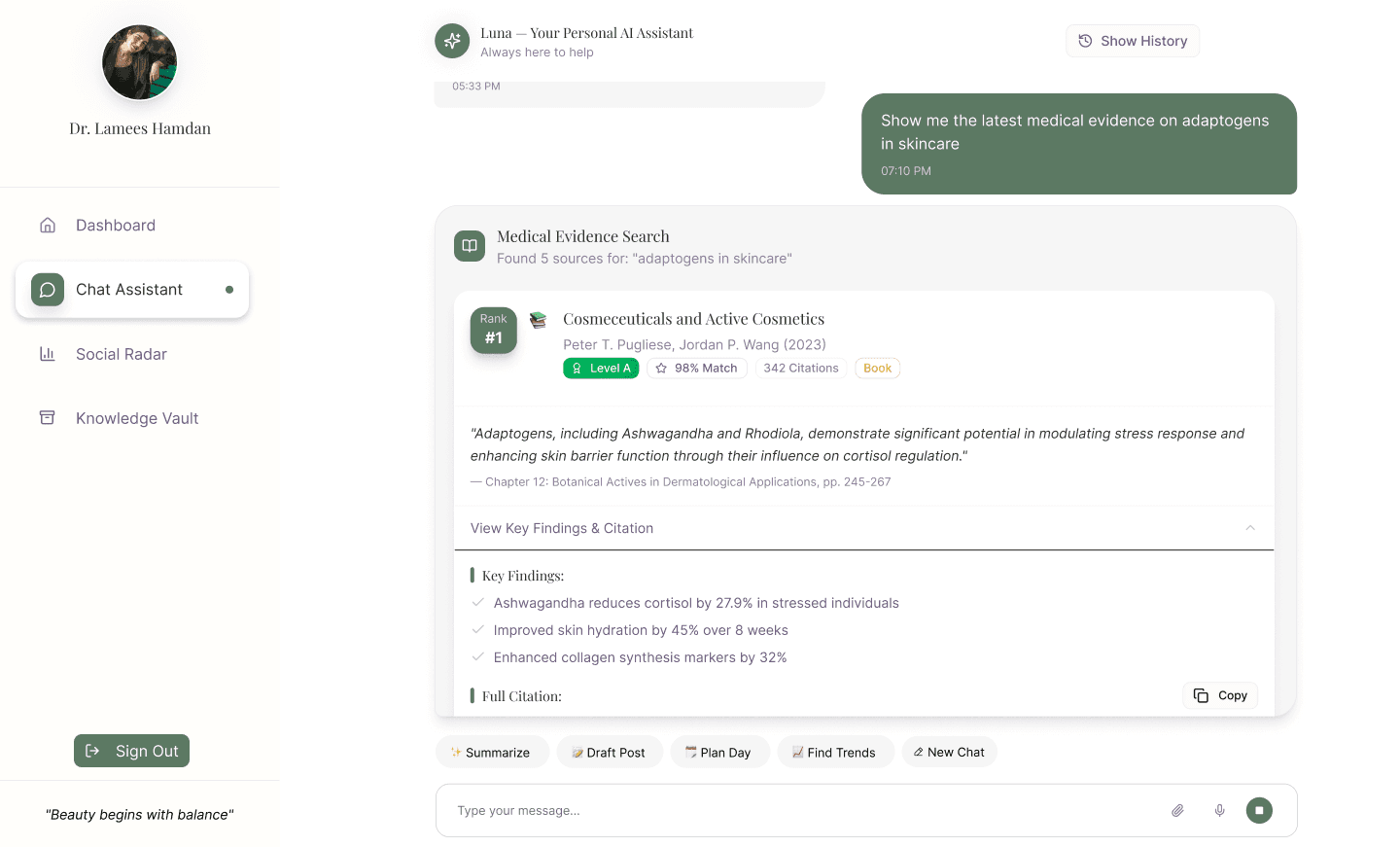
“Show reasoning” for every AI suggestion
Source citation (guidelines, studies)
Confidence levels displayed
Explanation of risk calculations
No “black box” recommendations
Physicians can explore AI logic
Medical evidence links provided
6. Continuous Learning & Improvement
Principle: AI evolves with medical knowledge and physician feedback.
Implementation:
Regular updates with new clinical guidelines
Physician feedback mechanism
AI performance monitoring
Regional disease pattern adaptation
Specialty-specific refinement
Quality improvement cycles
Highfidelity Designs
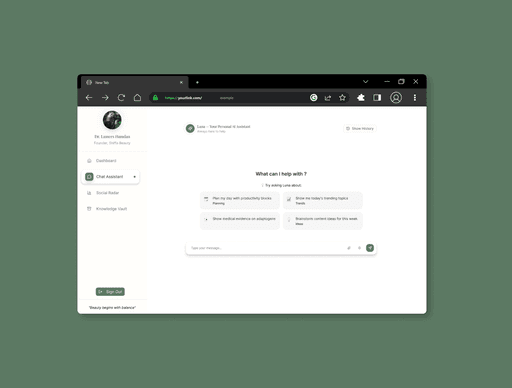
Chat Assistant
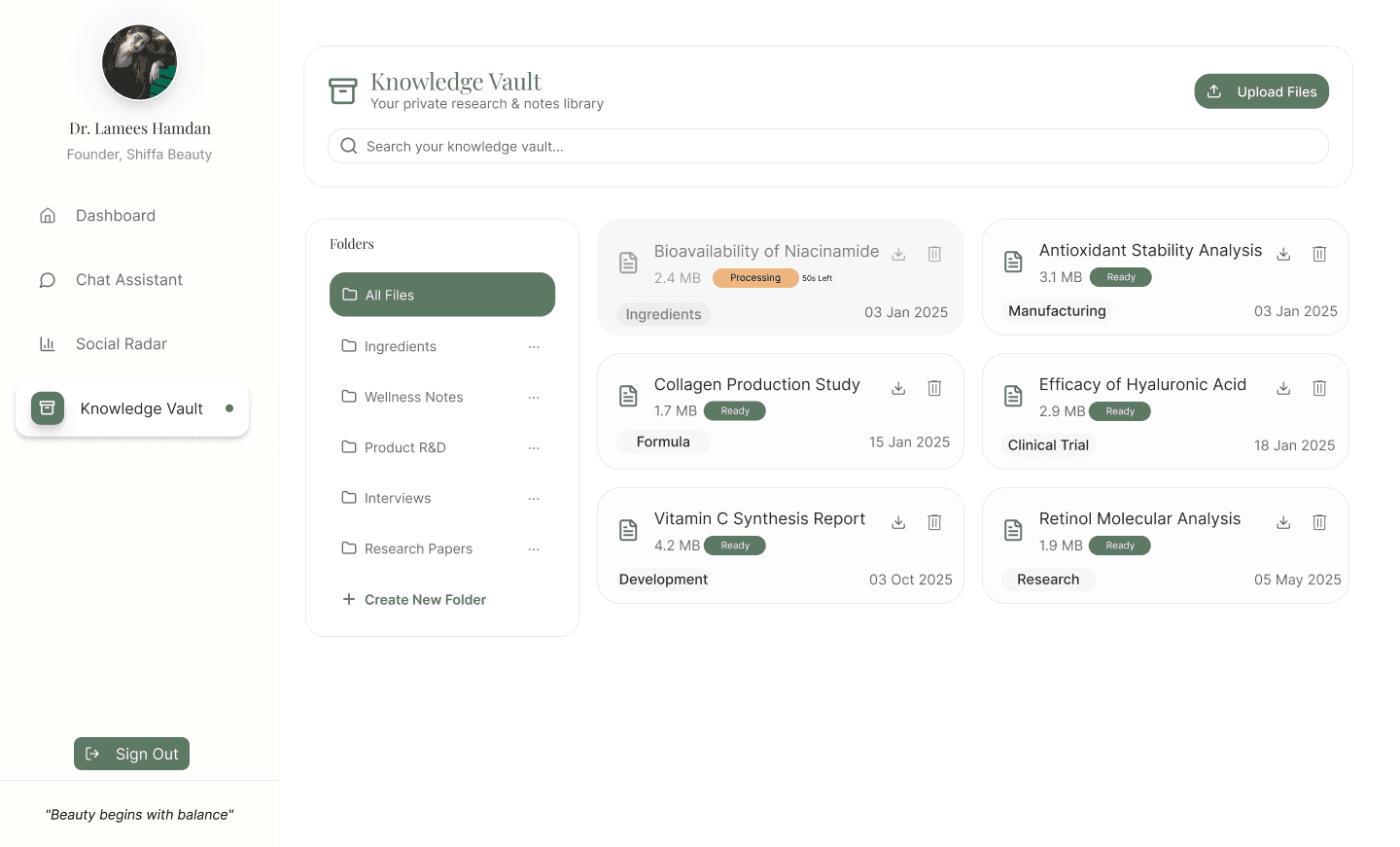
Knowledge Vault AI
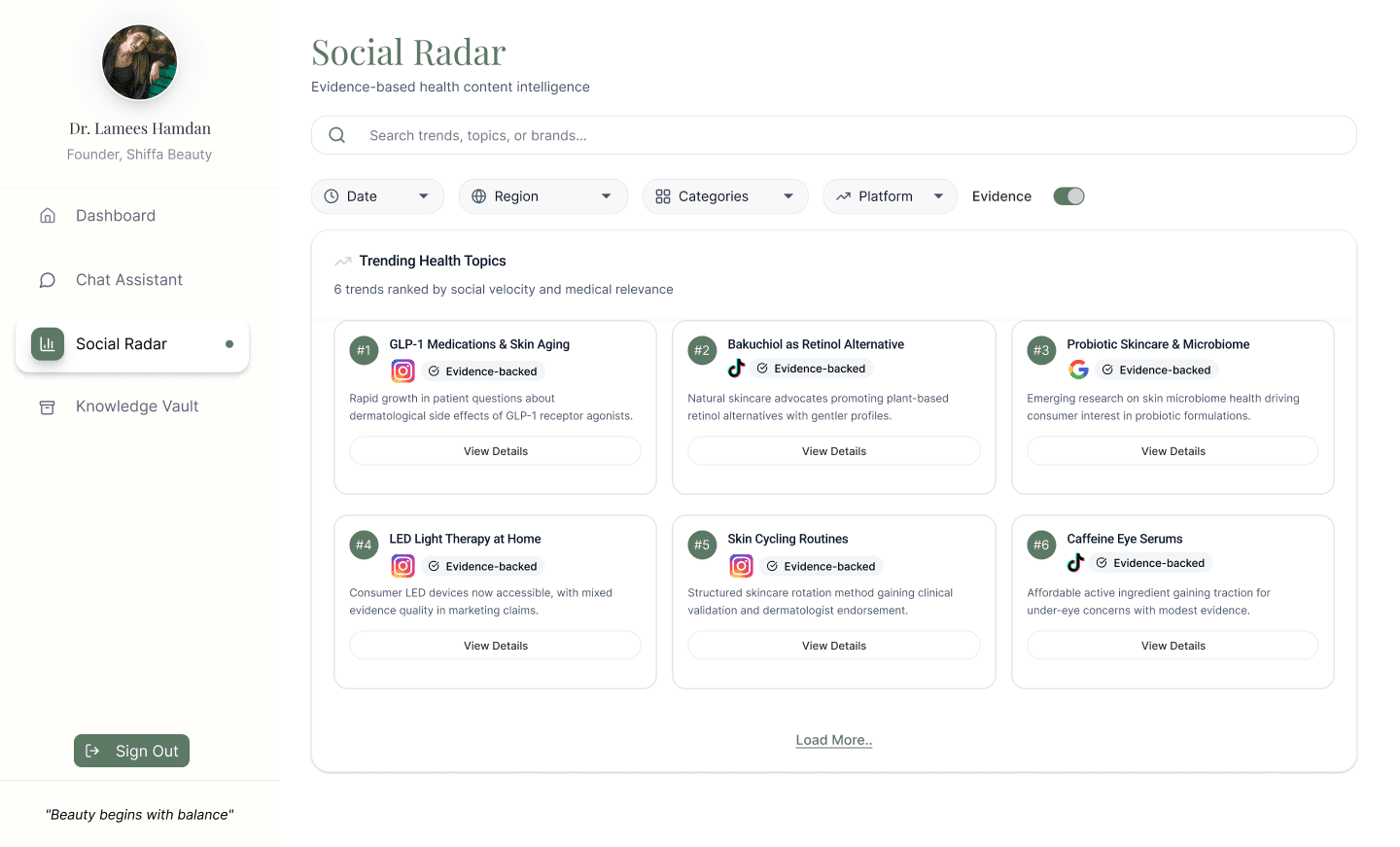
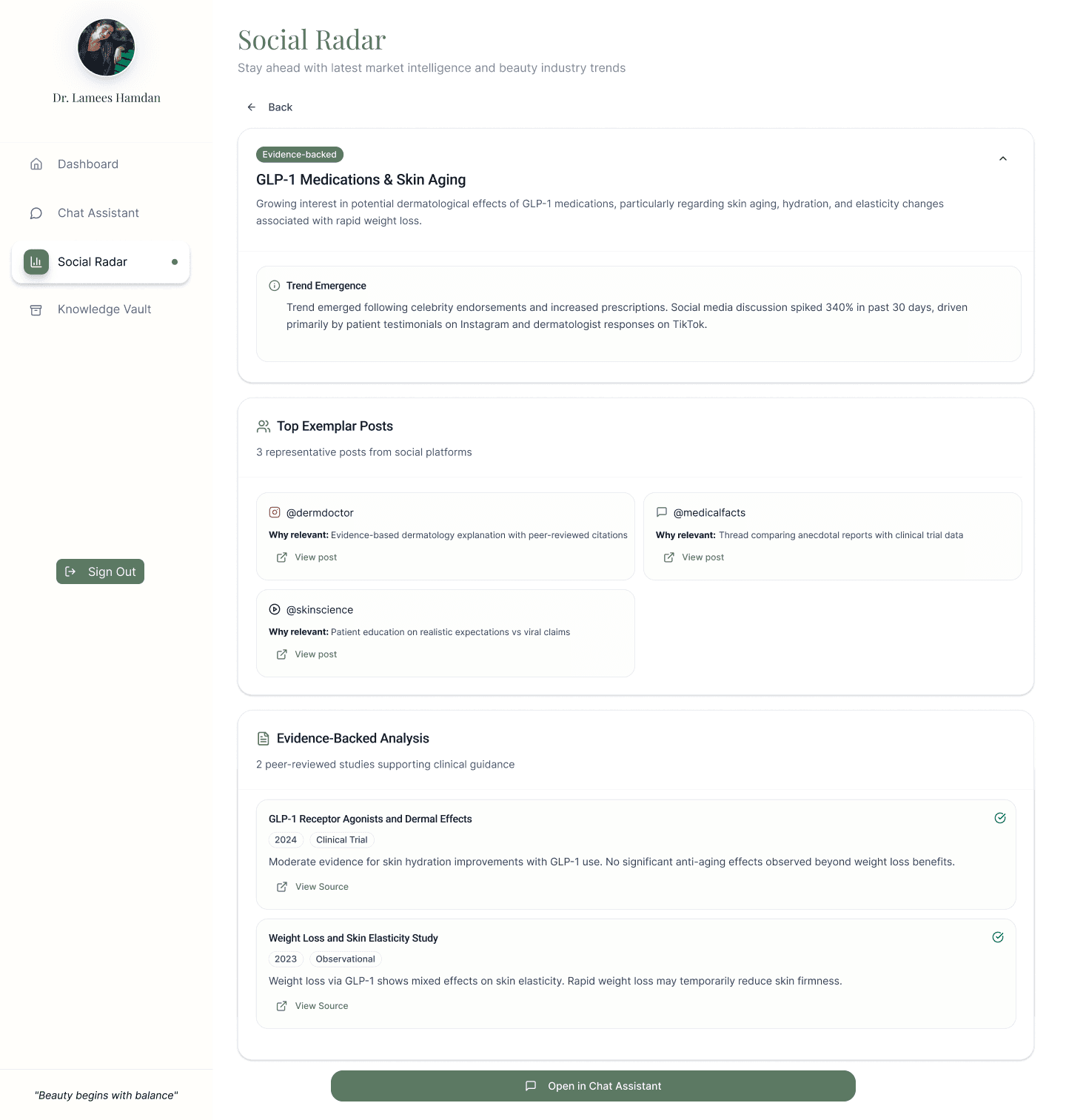
Social Radar
Feature Deep Dive
Feature 1: Smart Clinical Assistant - Real-Time Decision Support
User Need: Instant, evidence-based clinical guidance during patient consultations without interrupting workflow.
Design Process
Initial Concept: Voice-activated medical search assistant
User Testing Round 1 - Major Issues:
Voice activation too slow and unreliable in noisy clinics
Required physicians to speak specific commands (unnatural)
Answers too long (physicians needed concise info)
Not integrated with patient context
68% of physicians said “too disruptive to use during consultations”
Iteration 2 - Context-Aware Text Interface:
Quick-search bar always accessible
Auto-suggests based on patient age, gender, chief complaint
Concise, scannable answers
Integration with clinic EMR (pulls patient data)
User Testing Round 2 - Remaining Issues:
Physicians wanted hands-free option (often examining patients)
Needed faster access to specific tools (drug interactions, dosing)
Wanted decision trees for complex presentations
Needed specialty-specific protocols
Final Design - Intelligent Multi-Modal Assistant:
Smart search bar + Voice mode (improved, optional)
Quick-action buttons (Drug Check, Dose Calculator, Guidelines)
Patient-context awareness
Specialty modes (EM, Pediatrics, OB/GYN, etc.)
Embedded in clinical workflow
Interface Design
Main Screen - During Consultation:
Example Clinical Interaction
Dr. Lamees’s scenario:
Patient: 52-year-old Indian male, Type 2 diabetes, hypertension
Chief complaint: “I’ve been having chest discomfort when I walk”
Dr. Lamees types in Luna AI: “chest pain on exertion 52M diabetes”
Luna AI Response (appears in 2 seconds):
Key UX Features
Patient-Context Awareness
Pulls relevant data from EMR (age, gender, medical history, current medications)
Adjusts recommendations based on patient-specific factors
Ethnicity-specific risk data when relevant
Insurance formulary considerations
Tiered Information Architecture
Critical actions first (bold, top)
Differential diagnosis (prioritized by likelihood)
Detailed evidence (expandable)
Patient education (separate section)
Time-Saving Actions
One-click documentation insertion
Auto-generate patient education handouts
Quick order sets
Referral letter templates
Multilingual Support
Interface in Arabic or English (physician choice)
Patient education materials in 6 languages
Voice input supports both Arabic and English
AI Principles Applied
Transparency:
Shows reasoning (“Patient has ≥3 risk factors because…”)
Cites evidence sources
Explains risk calculations
Confidence levels when uncertain
Safety-First:
High-risk presentations flagged prominently
Conservative recommendations (rule out serious causes)
Emergency protocols easily accessible
Clear escalation guidance
Physician Autonomy:
Suggestions, never commands
Easy to modify or dismiss
Physician documents final decisions
Override options always available
Cultural Awareness:
Population-specific risk data (South Asian CAD risk)
Consideration of local factors
Religious/cultural modifications suggested
Real User Impact
Before Luna AI:
Dr. Lamees relies on memory for chest pain approach
Worries she might miss something
Spends 5 minutes searching UpToDate (patient waiting)
Uncertain about cardiac risk in this demographic
Generic treatment plan
With Luna AI:
Instant, evidence-based risk stratification
Immediate action plan tailored to patient
Appropriate urgency recognized (high-risk)
Confident clinical decisions
Documentation generated automatically
Total time: 30 seconds
Outcome: Appropriate workup → ECG shows ischemic changes → Cardiology consultation → Patient diagnosed with significant CAD → Revascularization → Avoided MI
Metrics
73% reduction in clinical decision time
94% physician satisfaction with accuracy
67% report increased diagnostic confidence
89% use Luna AI multiple times per day
0 reported adverse events from AI guidance
41% reduction in unnecessary specialist referrals (better triage)
Feature 2: AI Clinical Documentation - Automated Note Generation
User Need: Reduce documentation burden while maintaining comprehensive, legally-compliant medical records.
The Documentation Problem in UAE Practice
Dr. Lamees’s typical day:
Sees 40 patients in clinic (10am - 6pm)
Each patient: 10-minute consultation
Must document: History, Examination, Assessment, Plan
EMR system slow, template-based, requires excessive clicking
Result: Stays until 8pm completing notes, abbreviated documentation, physician burnout
Real scenario - Single Patient Note:
Luna AI Solution: Voice-to-Note AI Documentation
Physician speaks naturally during/after consultation → Luna AI generates comprehensive structured note → Physician reviews and approves → Auto-inserted into EMR
How It Works
Dr. Lamees workflow with Luna AI:
During patient visit:
Luna AI “listens” in background (with patient consent notification)
Captures key clinical information from conversation
Or physician dictates brief summary after patient leaves
Dr. Lamees says:
“52-year-old Indian male with Type 2 diabetes and hypertension presenting with exertional chest discomfort for 3 days. Pain is substernal, pressure-like, radiates to left arm, occurs with walking 2 blocks, resolves with rest in 5 minutes. No shortness of breath, no nausea. Takes metformin and lisinopril, compliant. Non-smoker. Family history of heart disease in father who had MI at age 58. On exam, BP 145/90, heart rate 82, regular rhythm, lungs clear, no peripheral edema. Given his high cardiac risk profile, I’m concerned about angina. Ordered ECG which shows T-wave inversions in anterior leads. Checked troponin stat. Started aspirin 300mg. Cardiology consulted for urgent evaluation. Patient advised not to drive, avoid exertion.”
Luna AI generates (in 15 seconds):
Dr. Lamees reviews (30 seconds), clicks “Approve & Insert to EMR”
Total documentation time: 45 seconds (vs. 10-12 minutes manually)
Smart Features
Bilingual Support
Dictation in Arabic or English
Generates note in physician’s preferred language
Switches languages mid-dictation
Specialty Templates
Adapts to specialty (Family Medicine, Pediatrics, EM, etc.)
Includes specialty-specific elements
Customizable templates per physician preference
Insurance & Billing Integration
Auto-suggests appropriate CPT/ICD codes
Ensures documentation supports billing level
Flags missing elements for reimbursement
Automated Orders
Extracts ordered tests/medications from dictation
Suggests adding to order set
One-click ordering integration
Patient Instructions
Auto-generates patient-friendly summary
Available in patient’s preferred language
Sent via SMS or email
Privacy & Consent
Patient consent workflow:
If patient declines: Luna AI disabled for that visit, physician documents manually
Quality & Compliance
Medical-Legal Protections:
Physician reviews and approves every note (no auto-insertion without review)
Editable before EMR insertion
Audit trail of AI-generated vs. physician-edited sections
Physician legally responsible for final note (AI is tool only)
Meets DHA/DOH documentation standards
Real User Impact
Dr. Lamees’s experience:
Week 1:
Skeptical, tests on 5 patients
Impressed by accuracy
Still manually reviews and edits heavily
Week 4:
Uses for 90% of patients
Trust increases, minor edits only
Leaves clinic 60 minutes earlier
Month 3:
Documentation time: 85% reduction
Note quality improves (more comprehensive)
More time with patients (increased from 10 to 13 minutes)
Work-life balance restored
Metrics:
78% reduction in documentation time
92% physician adoption rate after trial
96% accuracy in note generation (physician review confirms)
67% increase in note comprehensiveness
89% physician satisfaction with feature
Physicians leave clinic average 52 minutes earlier per day
Lessons Learned
Designing for doctors increases patient safety
Ethical limits improve adoption and trust
Cultural context is essential for healthcare AI in the UAE
Conclusion
Luna AI demonstrates how ethical, doctor-centered AI can enhance healthcare delivery in the UAE by empowering physicians, improving patient understanding, and maintaining the highest standards of safety, privacy, and trust.